
Corns vs Callus vs Verruca: How to Tell the Difference (and What to Do)
If you’ve ever noticed hard, thickened skin on your feet, you’re not alone. One of the most common questions we get in clinic is, “Is this a corn, a callus, or a verruca?” They can look very similar at first glance, but they are actually very different conditions, and knowing which one you’re dealing with is key to treating it properly.
A corn is a small, concentrated area of hard skin that develops due to pressure or friction, often from footwear or the way you walk. They are usually round, well-defined, and have a central core that presses into the skin. This is why corns can be surprisingly painful, especially when direct pressure is applied. They are most commonly found on the toes or areas where the foot experiences repeated pressure.
A callus, on the other hand, is a larger, more spread-out area of thickened skin that forms as a protective response. It develops when the skin tries to defend itself against ongoing friction or pressure. Calluses tend to appear yellowish, feel thick or rough, and are usually found on the heels, the balls of the feet, or along the sides of the toes. Unlike corns, they do not have a central core and are not typically painful unless they become very thick.
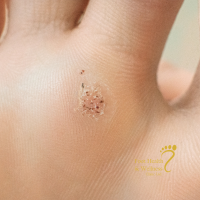
A verruca, also known as a plantar wart, is completely different because it is caused by a virus rather than pressure. Verrucas are linked to the human papillomavirus (HPV) and are often picked up in communal areas such as swimming pools or gyms. They usually appear on the soles of the feet and may have small black dots within them, which are tiny blood vessels. One key difference is that verrucas often disrupt the natural skin lines and can be painful when squeezed from the sides rather than pressed directly.
A simple way to help tell the difference is to think about how it feels. Pain when pressing directly down often points to a corn, while pain when squeezing from the sides suggests a verruca. A larger, thickened area with little discomfort is more likely to be a callus. The presence of black dots is another strong indicator of a verruca, whereas a hard central core suggests a corn. If you’re unsure, it’s always best to have it assessed professionally, as misdiagnosis is very common and can lead to ineffective treatment.
The causes also differ. Corns and calluses are usually caused by pressure and friction, often linked to poorly fitting footwear, foot structure such as bunions or hammertoes, or the way you walk. Verrucas, however, are caused by a viral infection that enters through small breaks in the skin, particularly in warm, moist environments.
Treatment depends on the correct diagnosis. Corns are best treated by safely removing the hard skin and addressing the source of pressure. This may involve padding, footwear advice, or regular foot care to prevent recurrence. It’s important not to try to cut them yourself, particularly if you have diabetes or circulation issues.
Calluses can often be managed at home with regular moisturising, especially with urea-based creams, and gentle filing if appropriate. However, if they become thick, uncomfortable, or start to crack, professional treatment is recommended to reduce them safely and effectively.
Verrucas can be more stubborn. Some will resolve on their own over time, but this can take months or even years. Treatment options include topical applications or specialist treatments carried out in clinic, as well as reducing pressure to make them more comfortable. One of the most common mistakes is treating a verruca as if it were a corn, which can delay healing and cause unnecessary discomfort.
You should consider seeing a Foot Health Practitioner if you’re unsure what you’re dealing with, if the area is painful or worsening, if it keeps coming back, or if you have underlying health conditions such as diabetes. Early intervention is always easier and more comfortable than leaving the problem to progress.
Corns, calluses, and verrucas may all involve hard skin, but they require very different approaches. Getting the right diagnosis is the first step to resolving the issue and preventing it from returning.
If you need help with your feet, we offer professional assessment and treatment at Foothealth & Wellness Clinic. Whether it’s a painful corn, a stubborn verruca, or ongoing callus build-up, we’ll create a personalised plan to get your feet comfortable and healthy again.
Book your appointment today:
www.foothealthandwellnessclinic.co.uk